
Back to School Meal Prep for Menopause — Feeding Everyone Without Losing Yourself
September has a very specific way of making you disappear from your own meal plan. Suddenly there are lunches to pack, schedules to manage, forms to sign, and a household that needs feeding on a tighter timeline than summer ever demanded — and somewhere in that shuffle, what you're eating quietly becomes an afterthought.
I see this every fall with the women I work with, and honestly, I see it in my own kitchen too. So let's talk about meal prep that actually accounts for you, not just everyone else at the table.

Why This Hits Differently in Perimenopause and Menopause
Skipping meals or running on coffee and whatever's left on your kid's plate has always been a bad habit. In perimenopause and menopause specifically, it's a worse one — protein and fibre needs go up, not down, and inconsistent eating tends to make blood sugar swings, energy crashes, and hot flashes noticeably worse. The version of "I'll eat later" that used to just mean you were hungry by 3pm now tends to mean you're hungry, foggy, and irritable by 3pm.
This isn't about guilt. Instead, it's useful to understand why September specifically tends to be the month your own eating falls apart the fastest and why it's worth protecting on purpose.
The Meal Prep Approach: Build for Yourself First, Then Layer the Family In
Most back-to-school meal prep content is built entirely around kids' lunches, with the adults figuring it out separately (or not at all). I want to flip that. Build your own base first, then adapt the family meals around it — not the other way around.
1. Batch a Protein Base Every Sunday
Pick one protein and cook a large batch — shredded chicken, hard-boiled eggs, baked salmon, or a big pot of lentils. This becomes the anchor for your lunches all week: added to a salad, wrapped, or eaten straight with vegetables on the side. The goal isn't a different meal every day — it's one reliable protein source you don't have to think about.
Practical tip: cook double what you think you need. The extra becomes dinner filler or goes into the kids' lunches too, so you're not doing two separate batch-cooking sessions.
2. Pre-Portion Your Own Snacks Alongside Theirs
You're already portioning snacks into containers for the kids' lunches — add your own at the same time. A small container of nuts, cut vegetables with hummus, or Greek yogurt with berries takes an extra two minutes when you're already elbow-deep in lunch prep, and it means you actually have something reasonable to grab at 3pm instead of standing in the pantry deciding nothing looks good.
3. Build a "Grab and Go" Breakfast System
Mornings in September are chaos — nobody has time to cook. Set up 3-4 breakfasts you can make in bulk on Sunday and portion into the fridge: egg muffins, overnight oats, or a big batch of a protein smoothie base you can blend fresh each morning. Twenty grams of protein before 9am matters more in this stage of life than most people realize, and it's the easiest meal to lose entirely once the school routine kicks back in.
4. One Big Dinner Prep Session, Not Five Small Ones
Trying to meal prep every single dinner separately is what makes people quit meal prep by week two. Instead, pick 2-3 dinners you can build in parallel from overlapping ingredients — a roasted chicken that becomes tonight's dinner and tomorrow's grain bowl, a big pot of chili that covers two nights and freezes a third portion. Less decision-making, less individual prep, more reused components.
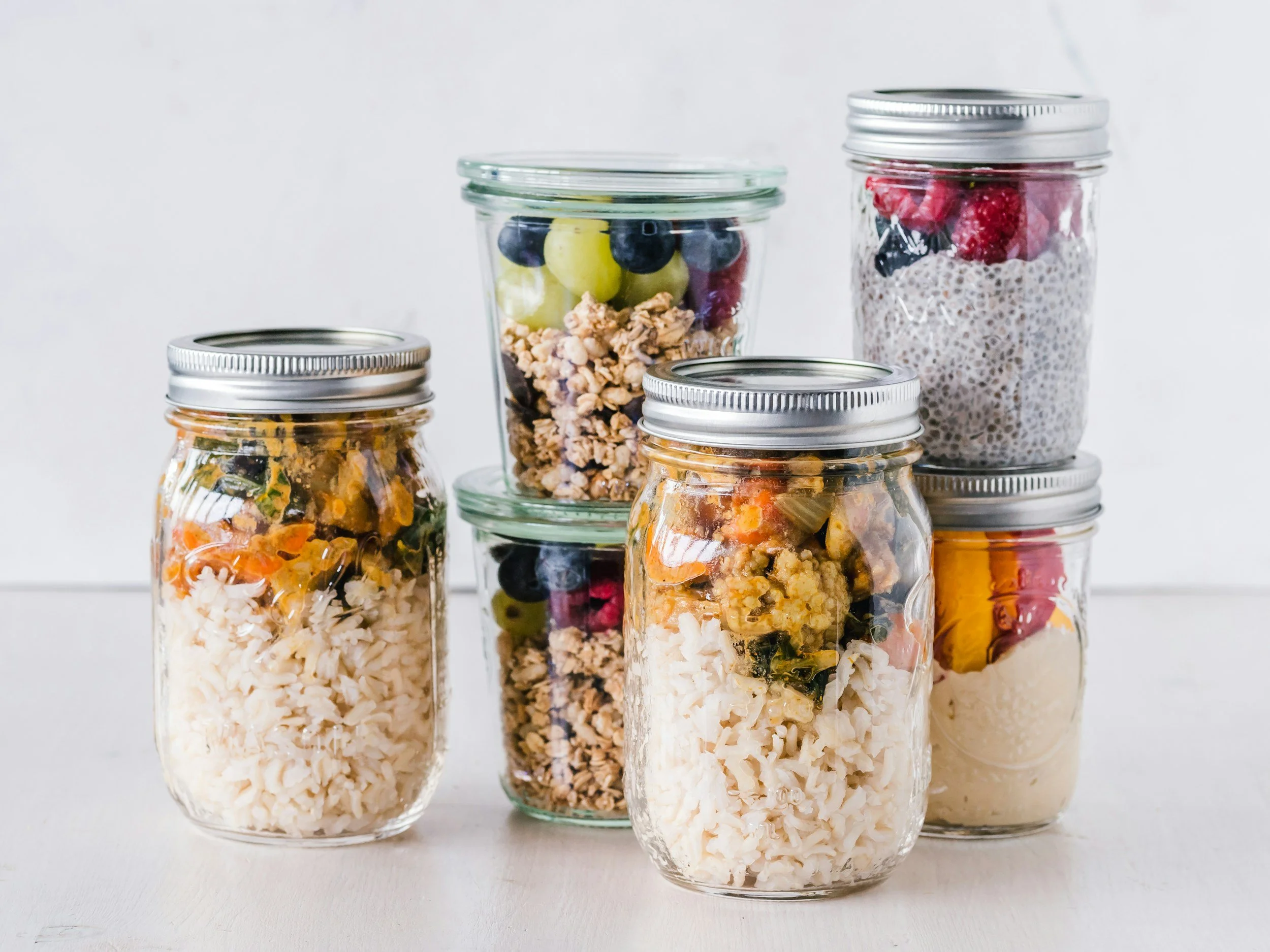
What This Actually Looks Like on a Sunday
Here's a realistic 90-minute version, not a full day given up to the kitchen:
Roast a tray of chicken thighs and a tray of vegetables at the same time (20 min hands-on, rest is oven time)
Hard-boil a dozen eggs while the oven's going
Portion nuts, cut vegetables, and fruit into grab-and-go containers for both you and the kids
Make one big batch of overnight oats in individual jars for the week
That's it. You're not cooking five separate menus — you're building components that get reassembled differently each day.
The Part Nobody Says Out Loud
You are allowed to eat the "kid food" too, or the reverse — your kids can eat some of what you're having. A lot of the back-to-school meal prep pressure comes from an assumption that the adult meal and the kid meal have to be completely separate systems. They don't. A protein, a vegetable, and a starch works for most of the table most nights, with small adjustments at the edges (more seasoning for you, less for a picky eater).
The less you're running two entirely parallel meal systems, the more sustainable this actually is past the first two weeks of September.
The Bottom Line
Back to school doesn't have to mean your own nutrition disappears until the routine settles. Build your protein and snack base first, let the family meals layer on top of it, and give yourself one consolidated prep session instead of five scattered ones. You're not just feeding a household through September — you're feeding yourself through a stage of life that needs more consistency, not less.
