
Fibremaxxing: Why Fibre Is the Most Underrated Menopause Tool
Fibremaxxing - yes, it's a real thing. And, as a Registered Dietitian in perimenopause myself, I am fully on board.
The internet gave us a silly name for something genuinely important — and in the menopause conversation specifically, fibre deserves far more attention than it gets. We talk endlessly about protein. We debate supplements. We count phytoestrogens. Meanwhile fibre is quietly doing some of the most meaningful work of any nutrient in your perimenopause and menopause toolkit — and most Canadian women are getting roughly half of what they need.
This is the post where we fix that.
RD NOTE
Women in Canada need approximately 25g of fibre per day. Most are getting somewhere around 13-15g. That gap matters more in menopause than at any other stage of life because fibre is doing several jobs simultaneously — feeding the gut bacteria that regulate estrogen metabolism, slowing glucose absorption to smooth out blood sugar swings, supporting cardiovascular health as estrogen's protective effect declines, and keeping digestion moving through a transition that often disrupts it. No supplement does all of that. Fibre does. And it costs almost nothing.
Why Fibre Matters More in Menopause Than You Think
It supports how your body processes estrogen.
Your gut has an estrogen recycling system — the estrobolome — a collection of gut bacteria responsible for metabolizing circulating estrogen. When your gut microbiome is well-fed and thriving, this system works efficiently. When it isn't — which happens when fibre intake is low — estrogen metabolism becomes dysregulated, which can worsen the hormonal symptoms you're already managing.
Fibre feeds the gut bacteria that keep this system running. Every gram counts.
It smooths out blood sugar swings.
As estrogen declines, insulin sensitivity decreases — meaning your blood sugar becomes more reactive than it used to be. The energy crashes, the afternoon brain fog, the hot flashes that seem to come out of nowhere — blood sugar instability is connected to all of them.
Soluble fibre slows the rate at which glucose enters your bloodstream. Not dramatically, not pharmaceutically — but meaningfully and consistently, meal after meal, day after day. That consistency is where the real benefit lives.
It supports your heart.
Estrogen offered significant cardiovascular protection that you can no longer rely on in the same way post-menopause. Soluble fibre — particularly the kind found in oats, legumes, and flaxseed — is one of the most evidence-supported dietary tools for supporting healthy cholesterol levels. This is not a small thing. This is one of the most important nutritional shifts you can make in midlife.
It keeps things moving.
Progesterone decline slows gut motility. Thyroid changes that often accompany perimenopause slow things further. Many women notice significant digestive changes in this transition that nobody warned them about. Adequate fibre intake — combined with enough water — is the most effective food-first approach to managing this. It is boring advice and it works.
Want to see what a full week of high-fibre, hormone supporting meals actually looks like on a plate?
My free 7-day Canadian menopause meal plan is built around exactly these foods - practical recipes, everyday grocery store ingredients, no complicated prep.
How to Actually Fibremaxx — Practically
The goal is 25g per day. Here is what that looks like in real food, without overhauling your entire diet.
Start with breakfast.
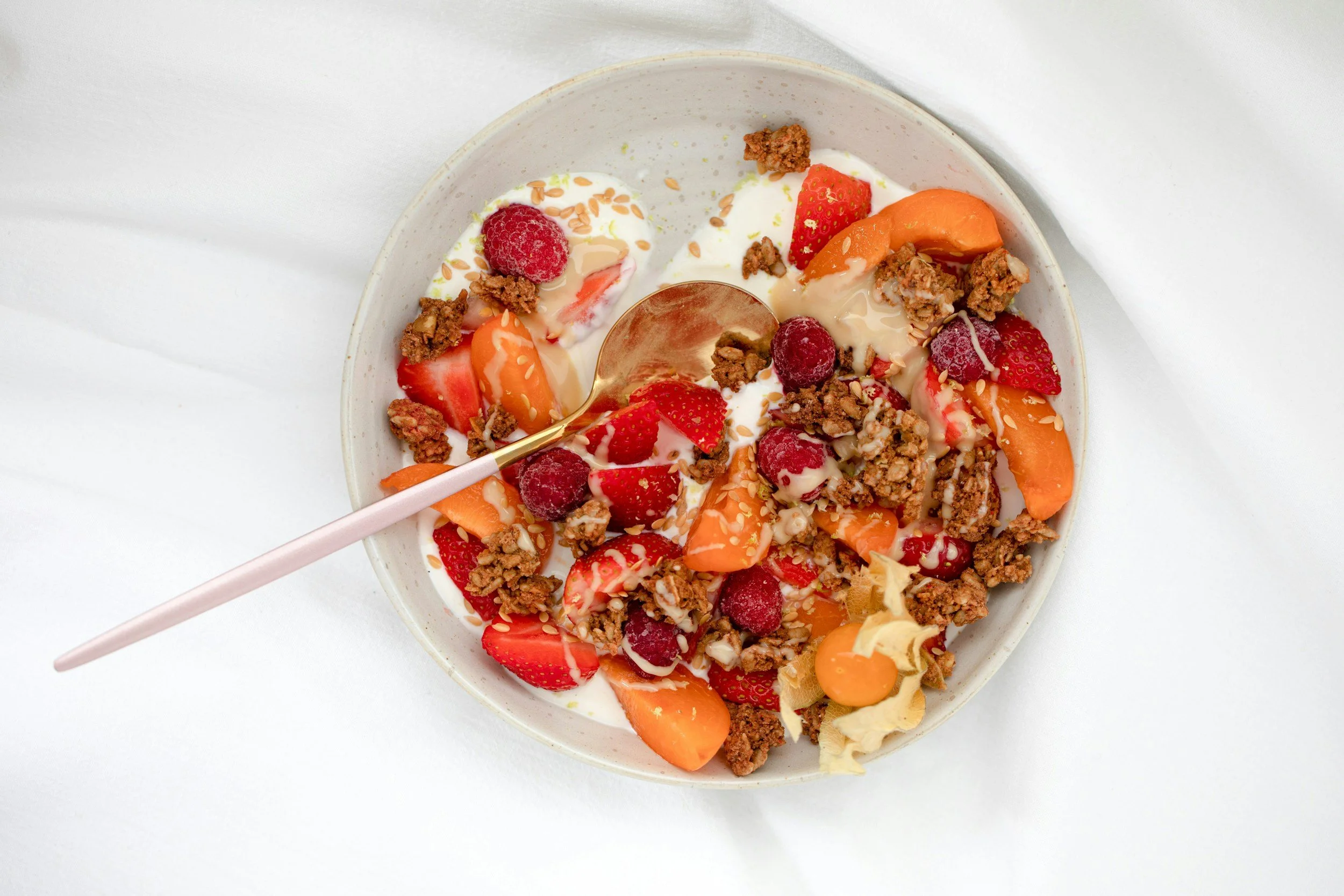
This is where most women lose the most ground. A white toast or low-fibre cereal breakfast gives you maybe 1-2g of fibre before 9am. Swap it for oats, add ground flaxseed, throw in some berries — and you can hit 10-12g before you leave the house.
Practical swap: ½ cup rolled oats + 1 tbsp ground flaxseed + ½ cup raspberries = approximately 10g fibre. Same effort. Dramatically different result.
Add legumes twice a week — at minimum.
Legumes are the highest-fibre foods available at any Canadian grocery store and among the least expensive. Chickpeas, lentils, black beans, kidney beans — one half-cup serving gives you 6-8g of fibre. Add them to soups, stir them into pasta sauce, toss them on a salad. They do not require a recipe. They require a can opener.
Practical swap: Add half a can of rinsed chickpeas to whatever salad you were already making. Done. 6g fibre, zero extra effort.
Ground flaxseed goes in everything.
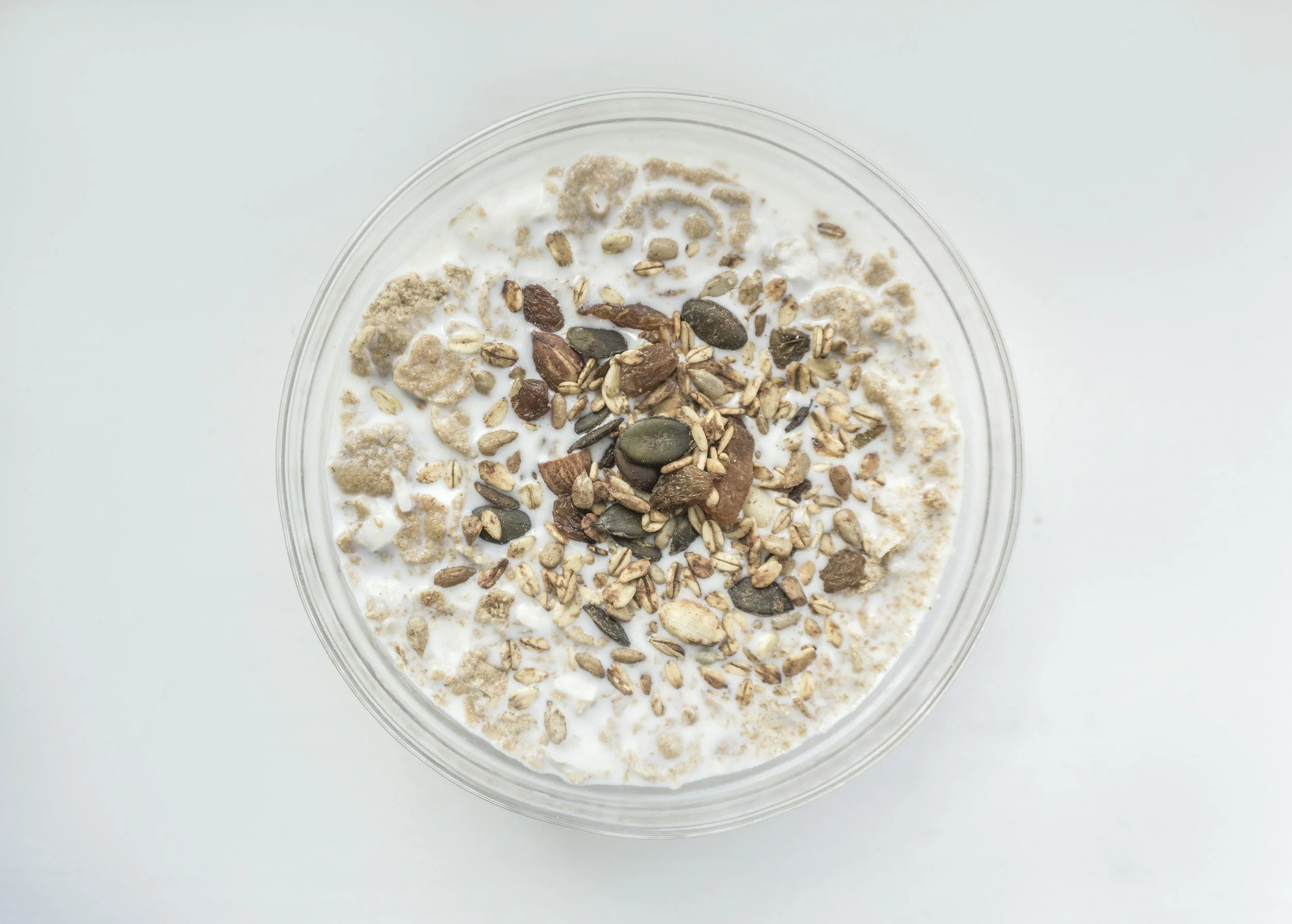
This is the highest return on investment item in your pantry for menopause nutrition. One tablespoon gives you approximately 2-3g of fibre plus lignans — plant compounds that support estrogen metabolism through the gut — plus omega-3 fatty acids. It costs a few dollars for a bag that lasts weeks. It has virtually no flavour. It goes in oatmeal, yogurt, smoothies, baked goods, and pasta sauce without anyone noticing.
Buy it. Put it on your counter. Add a tablespoon to something every single day. This is the easiest fibremaxxing win available to you.
Eat the skin.
Apple with the skin — 4.4g fibre. Apple without the skin — 2.1g. Potato with the skin — 3.8g fibre. Potato without — 1.8g. The skin is where a significant portion of the fibre lives. Leave it on whenever you can. This is a zero-effort upgrade.
Make vegetables the base, not the side.
The classic plate is protein in the centre, starch on one side, vegetables as an afterthought. Fibremaxxing flips that — vegetables and legumes take up more of the plate, protein anchors it, starch supports it. You don't need to eliminate anything. You need to adjust the proportions.
Practical shift: Whatever vegetable you were going to serve as a side — double it. That's it.
Choose whole grains consistently.
Whole grain bread over white, brown rice over white, whole wheat pasta when it works for you. The fibre difference is real and consistent. This is not about perfection — it is about making the higher-fibre choice the default rather than the exception.
What to look for on the label: At least 2-3g of fibre per slice for bread, whole grain listed as the first ingredient.
The Fibremaxxing Starter Kit
If you are starting from a low fibre baseline, increase gradually. Going from 13g to 25g overnight will make you uncomfortable — your gut needs time to adjust. Add 3-5g per week and drink more water as you go. The bloating and gas that sometimes accompanies a sudden fibre increase is temporary. The benefits are not.
Your weekly fibremaxxing non-negotiables:
Ground flaxseed daily — one tablespoon minimum
Legumes at least twice a week
Oats at least three mornings a week
Vegetables at every meal — doubled from what you're currently serving
Whole grain as the default bread and grain choice
Berries several times a week — raspberries and blackberries are the highest fibre fruits available
High Fibre Foods Worth Knowing
A quick reference for your next grocery run:
Highest fibre per serving:
Lentils — 15g per cup cooked
Black beans — 15g per cup cooked
Chickpeas — 12g per cup cooked
Edamame — 8g per cup
Raspberries — 8g per cup
Avocado — 10g per whole avocado
Oats — 4g per ½ cup dry
Ground flaxseed — 2-3g per tablespoon
Chia seeds — 10g per ounce
Whole wheat pasta — 6g per cup cooked
Sweet potato with skin — 4g per medium
Almonds — 3.5g per ounce
Fibre is not glamorous. It does not have a marketing budget. Nobody is selling you a fibremaxxing supplement stack. It is just food — inexpensive, widely available, evidence-supported food that is quietly doing more for your menopause symptoms than most things you are probably spending money on.
Fibremaxx. Your gut, your hormones, and your future self will thank you.
Disclaimer: This post is for educational purposes only and does not constitute medical advice. For personalized guidance, speak with your healthcare provider or a Registered Dietitian.
If fibre is doing this much work for your hormones, your gut, and your blood sugar - imagine what a full week of meals built around it could do.
The Hormone & Hot Flash recipe pack was designed with exactly this in mind. Twelve RD-designed recipes built around high-fibre, phytoestrogen-rich foods that support hormone balance in menopause, using ingredients in any Canadian grocery store.
