
How to Eat at a BBQ Without Wrecking Your Blood Sugar (A Menopause Guide)
Summer BBQs are one of the best parts of the season. They are also one of the easiest places for blood sugar to spiral if you're in perimenopause or menopause. Buns, chips, sugary marinades, and a few too many drinks can leave you bloated, exhausted, and dealing with a hot flash before dessert even shows up.
The good news is you don't need to skip the BBQ, you just need a plan.
Why BBQs Are Trickier in Midlife
A few things stack up against you at a typical backyard cookout:
Refined carbs everywhere
Buns, chips, pasta salad, and sugary BBQ sauce all spike blood sugar quickly — and insulin sensitivity already declines with estrogen loss, meaning those spikes hit harder and last longer than they used to.
Alcohol plus heat
A cold drink in the sun feels harmless, but alcohol is one of the most common hot flash and night sweat triggers, and it dehydrates you faster in summer heat.
Protein often comes last, not first
Burgers and hot dogs technically have protein, but by the time you've added the bun, the chips, and a sugary drink, the meal is carb-heavy with protein as an afterthought.
None of this means avoiding the BBQ. It means building your plate with intention.
What I Actually Do at a BBQ
I don't skip the burger. I don't skip the drink. I just build around them.
I fill half my plate with protein first.
Burger, chicken, or fish — whatever's on the grill — goes on the plate before anything else. This anchors blood sugar before the carbs show up.
I pick one starch, not three.
If there's a bun, chips, and pasta salad, I choose one. Usually the bun, because I'd rather have the burger as intended than stack three refined carbs on one plate.
I load up on the salads with vegetables in them.
Coleslaw, a green salad, grilled vegetables — whatever's there that isn't just mayo and noodles.
I have my drink with food, not on an empty stomach.
Alcohol on an empty stomach hits faster and harder — pairing it with a meal slows absorption and reduces the hot flash risk.
I drink a glass of water between drinks.
This single habit does more for next-day energy than almost anything else on this list.
What to Eat at a BBQ
Protein — fill this first:
Grilled chicken, burger patty, or fish
Skip the bun if you want to maximize protein-to-carb ratio, or keep it — your call
Vegetables — fill generously:
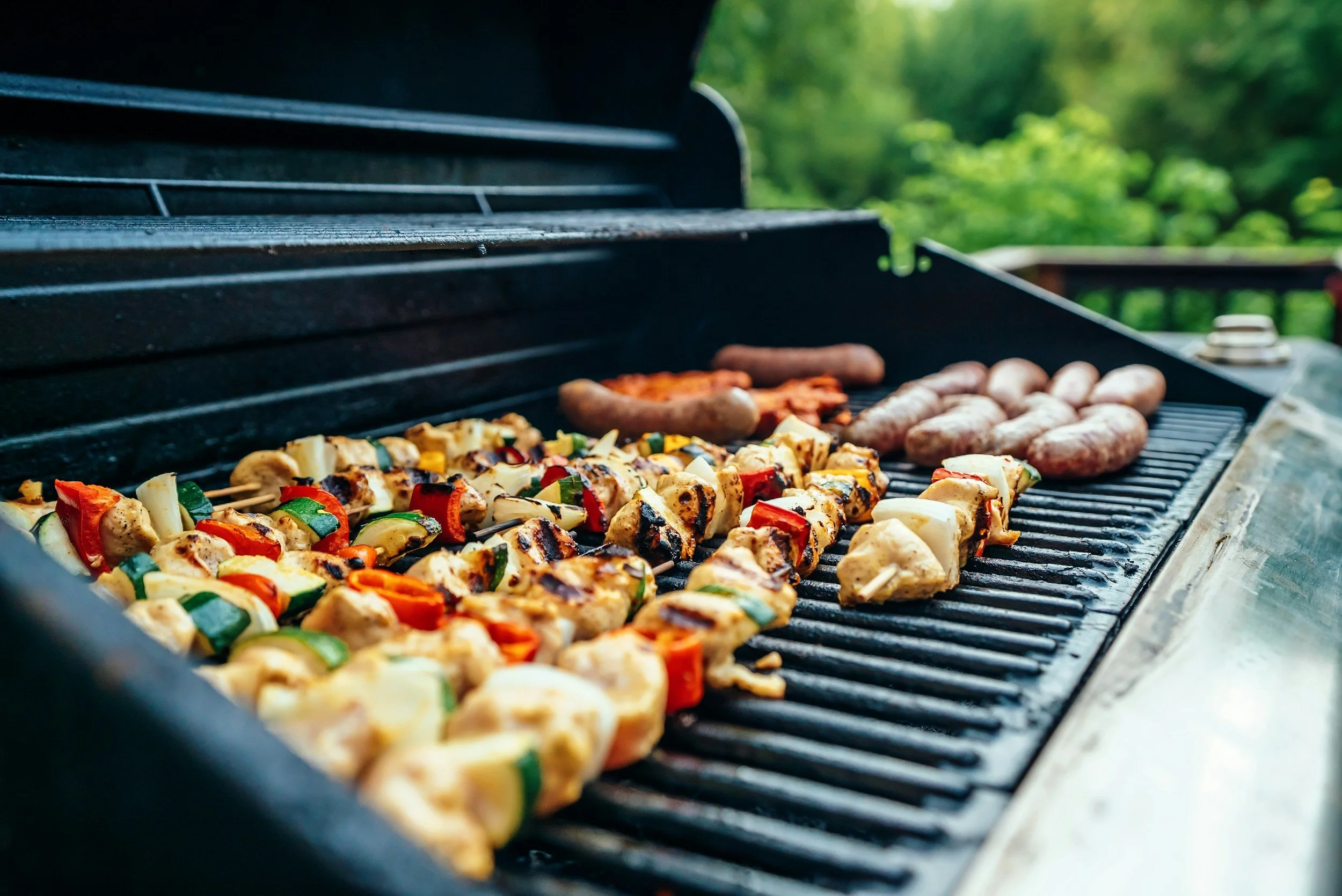
Grilled vegetables (zucchini, peppers, corn)
Green salad
Coleslaw made with a vinegar base rather than heavy mayo, if available
Pick one starch:
The bun
Potato salad
Pasta salad
Corn on the cob
Fermented, if available:
Pickles
Sauerkraut-based slaw
A vinegar-based pasta or potato salad (the vinegar offers a small acidic benefit, though it's not a true fermented food)
What to Watch For
Sugary BBQ sauces and marinades
Many store-bought sauces are loaded with added sugar. A squeeze of mustard or a vinegar-based sauce is a lower-sugar option if you want to dress your protein.
Sugary cocktails and cooler
These combine alcohol with a sugar spike, which a double hit for blood sugar and hot flash risk. A drink with soda water and a splash of juice, or wine, is a gentler choice.
Chip and dip spreads
Easy to graze on mindlessly. If you want chips, portion some onto your plate rather than eating straight from the bag.
A Simple BBQ Plate Formula
Protein (half the plate) + Vegetables (a quarter of the plate) + One starch (a quarter of the plate) + Water between drinks
That's it. You don't need to count anything or turn down what's being served.
You just need to build the plate with intention.
Want More Guidance Like This?
The free 7-Day Hormone-Supporting Meal Plan takes the same plate-building approach and applies it to every meal — protein first, blood sugar balance, and food that actually works for your hormones. No calorie counting, no complicated recipes.
Disclaimer: This post is for informational purposes only and is not intended as medical advice. Every woman's experience of menopause is unique. Please consult your doctor, registered dietitian, or healthcare provider before making significant changes to your diet, alcohol intake, or nutrition.
