
If you spend any time in menopause conversations online, you'll notice a quiet tug-of-war. One side says hormone therapy is the answer. The other says food, supplements and lifestyle are the answer, no prescription needed. Both sides tend to talk as if you have to pick one.
I'm a Registered Dietitian, and I'm on hormone replacement therapy, or HRT for short, myself. Here's where I've landed: it isn't either/or. HRT and food do different jobs, and the more useful question isn't "which one?" but "what is each one actually good for?"
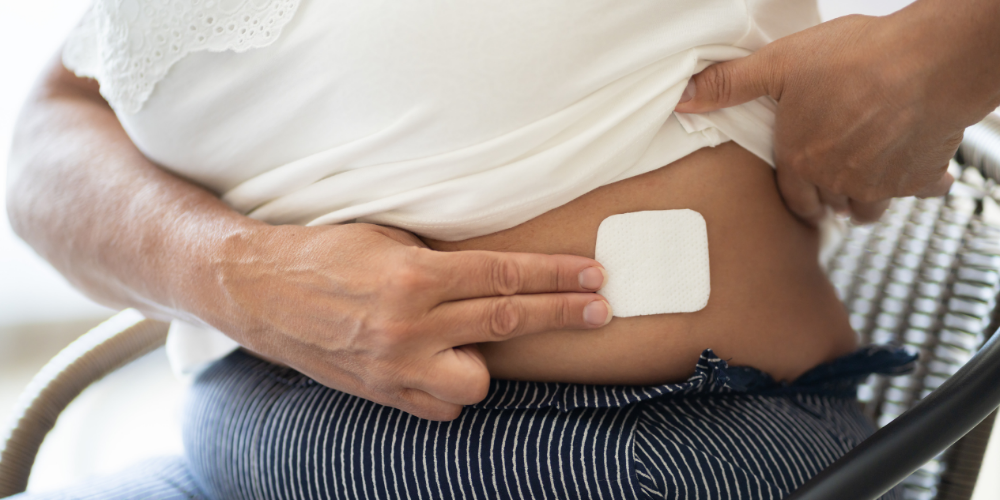
Photo credit: Andrey Popov/Shutterstock
DISCLAIMER: A quick note on scope before we start. I'm a dietitian, not a prescriber. Whether HRT is right for you is a decision for you and your clinician, based on your age, health history and goals, and nothing here is meant to push you in either direction. What I can do is tell you, based on what the major menopause societies have published, what food can and can't do, and where it works alongside medication.
What HRT Does That Food Can't
The Menopause Society (formerly NAMS), which is the main North American professional body for menopause, says in its 2022 position statement that hormone therapy is the most effective treatment for hot flashes and night sweats, and for the genitourinary symptoms of menopause, like vaginal dryness and urinary changes. It has also been shown to prevent bone loss and reduce fractures. The Society's view is that for women under 60, or within 10 years of menopause, with no contraindications, the balance of benefits and risks is generally favourable, and that treatment should be individualized.
(That last part is a conversation for your doctor. I'm only telling you what it does so you can see where food fits.)
Now the part that surprises people. When the same Society reviewed non-hormone options for hot flashes in 2023, it noted that research on diet and hot flashes is limited, and it did not recommend dietary changes, soy foods, soy extracts, or supplements as treatments, citing limited or mixed evidence. "Not recommended" there means the evidence isn't strong enough, not that these foods are harmful. Soy is still a perfectly good food. But if you were hoping the right eating pattern would switch hot flashes off, I'd be doing you a disservice to say it will.
Bone works the same way. HRT slows bone loss. Calcium and vitamin D are essential for bone health, but they aren't a stand-in for what hormone therapy does for bone loss.
What Food Does That HRT Doesn't
Muscle
This is the big one. A 2019 meta-analysis of 12 randomized trials, covering more than 4,400 postmenopausal women, found no significant difference in lean muscle mass between women on hormone therapy and women who weren't. The findings on muscle strength are mixed, with a 2020 meta-analysis finding no significant effect. In other words, HRT isn't a muscle-protection plan.
What does build and keep muscle? Resistance training, and eating enough protein. I'll be honest that the protein research in postmenopausal women is more mixed than social media suggests: some trials show small gains, others show none, and nearly all of them are done alongside strength training. Whey protein supplements on their own, without lifting, haven't shown a significant benefit for muscle strength or lean mass. Observational studies do link higher protein intake with better muscle mass and strength. So I still put protein first, as fuel for the work you do, but I won't tell you it can stand in for lifting.
Bone building blocks
If HRT slows the loss, food supplies the raw material. Osteoporosis Canada recommends 1,200 mg of calcium a day (food plus supplements) for adults over 50. Health Canada recommends a daily 400 IU vitamin D supplement for adults over 50, in addition to vitamin D-rich foods, and Osteoporosis Canada's total target for that age group is 800 to 2,000 IU. Your own numbers are worth checking with your doctor.
The everyday stuff
Blood sugar that doesn't crash by mid-afternoon. Enough fibre. Eating enough at all. A gut that works. These are daily habits that shape how you feel and function, and they matter whether or not you're on HRT. No prescription makes up for skipping meals and running on coffee.
Side by Side
My Own Story, Briefly
I'm on HRT. For me it's one piece of a bigger picture that also includes treating my sleep apnea and building movement back into my days, and food never stopped mattering. It just got a more honest job description. That's my experience, not a recommendation.
Questions Worth Bringing to Your Appointment
Is hormone therapy an option for me, given my age, how long it's been since my last period, and my health history?
Should I have my bone density checked, and do I need a calcium or vitamin D supplement?
Is there anything about food, supplements or alcohol I should know about with my prescription? (Your pharmacist is a great resource here.)
If HRT isn't right for me, what other options exist for the symptoms that bother me most?
If You're Not on HRT
If you can't take HRT, or you've decided it isn't for you, food isn't a consolation prize. It's a different tool with a different job, and the habits above still matter. There are also evidence-based non-hormone options for hot flashes that your clinician can walk you through. Neither path is the "right" one by default.
The Bottom Line
Food can't replace HRT. HRT can't replace food. One is the most effective treatment we have for hot flashes and for preventing bone loss. The other are things food can help with - how you protect muscle, build bone, and how you can feel steady day to day.
If you'd like the food side organized by symptom, the Menopause Nutrition Playbook is the place to start, and Feed the Transition is my clinical nutrition guide that explains the four shifts underneath it all.
