
 Image 1 of 3
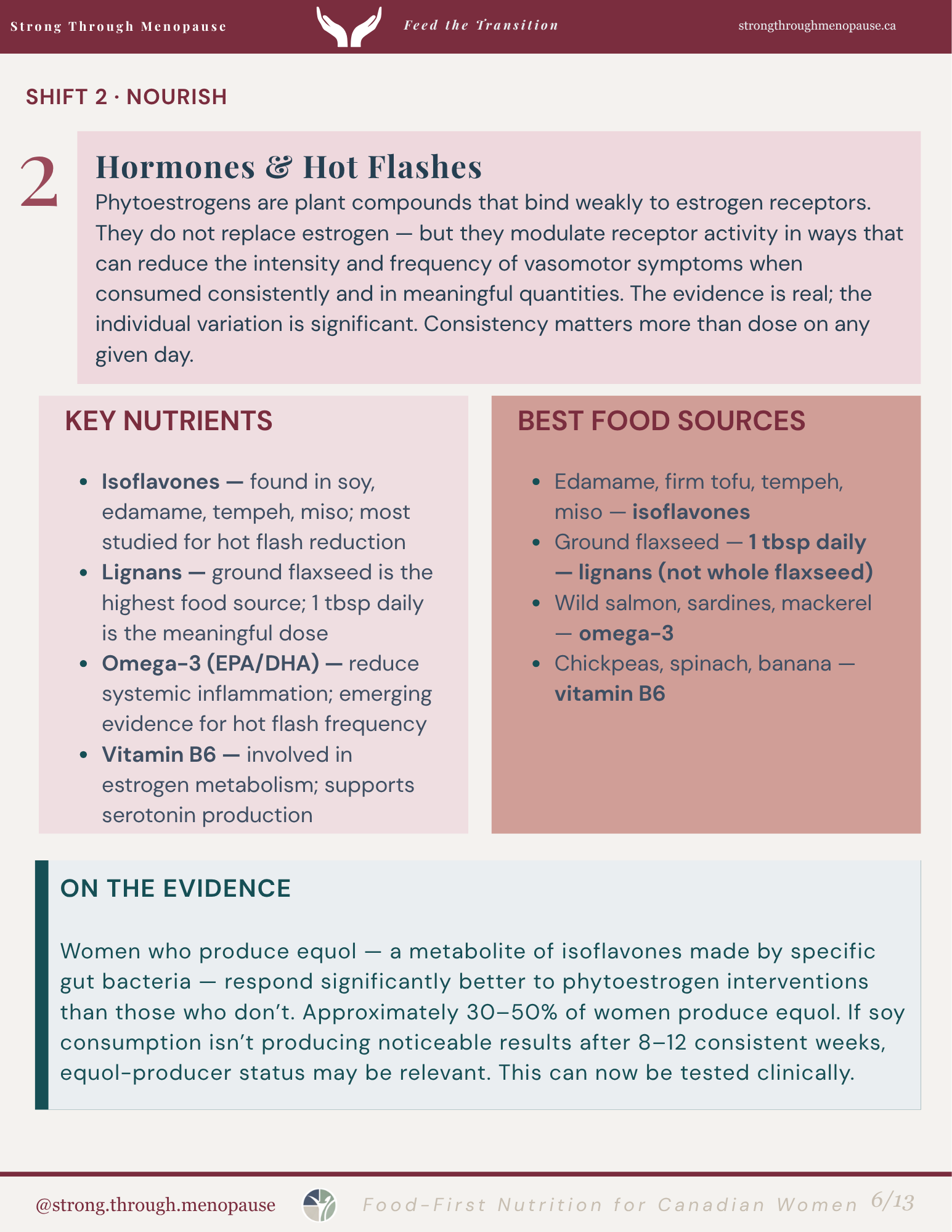 Image 2 of 3
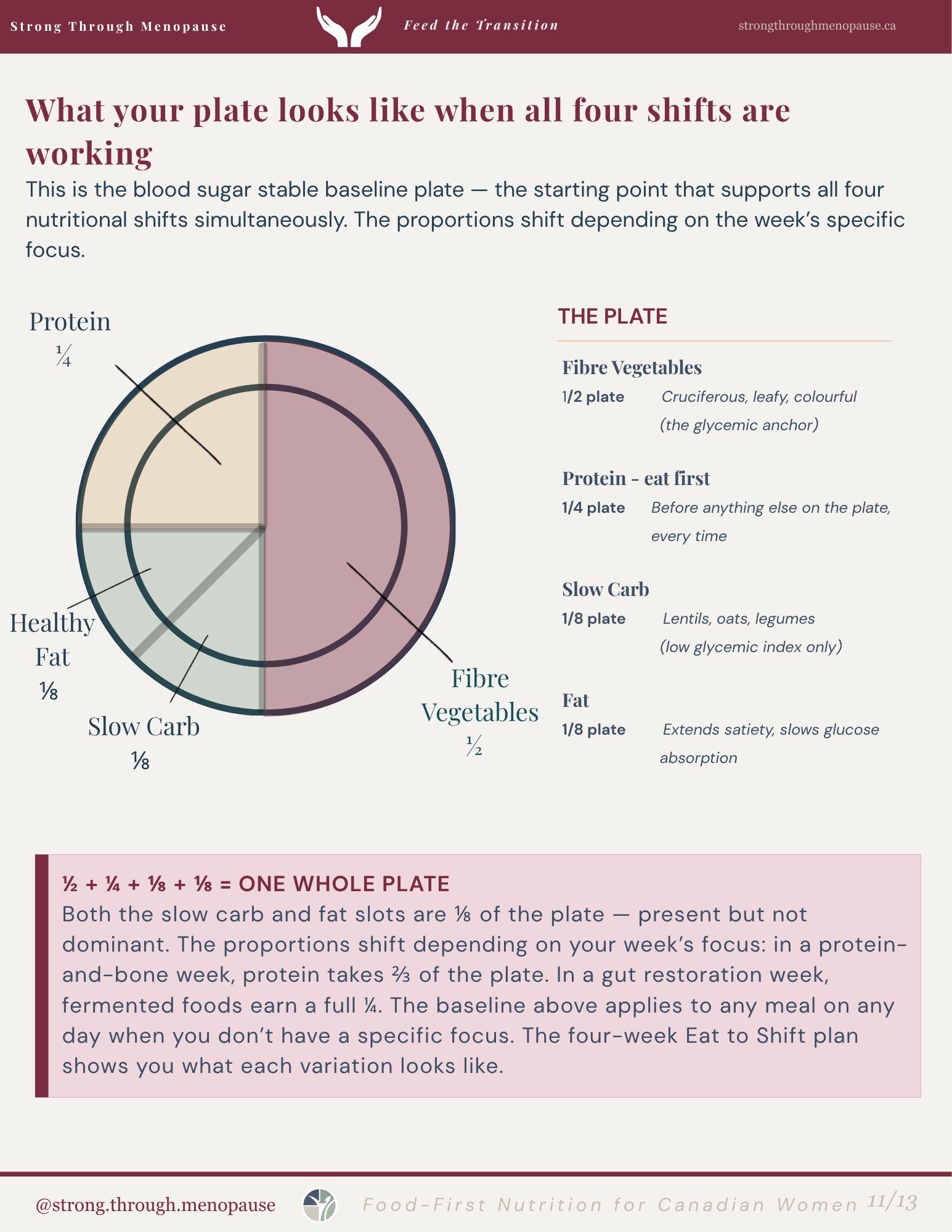 Image 3 of 3
You've read the articles. Maybe even a book. You know estrogen is declining, that blood sugar gets harder to manage, that your bones need attention now, not later. What you don't have is anywhere that pulls all of that together into one place you can actually act on.
Here's what most menopause content gets wrong: it picks one shift — usually hot flashes, sometimes weight — and treats it like the whole story. It isn't. Blood sugar, hormones, bone and muscle, and gut and brain are all shifting at the same time, often for related reasons, and treating them as four separate problems means you're always working with three-quarters of the picture missing.
Feed the Transition exists to fix that. Developed by a Canadian Registered Dietitian with 25 years of clinical experience who is navigating perimenopause herself, this is the framework that sits underneath everything else in this shop — the guide that explains why each shift is happening before you decide what to do about it.
What's inside:
The four biggest nutritional shifts of perimenopause and menopause, explained one at a time — blood sugar, hormones, bone and muscle, and gut and brain
What's actually happening in your body during each shift, in plain clinical language, not vague wellness-speak
A practical, food-first strategy for each shift — not a list of foods to fear, and not a prescription for restriction
Clinical RD notes throughout, explaining the mechanism behind each recommendation, not just the recommendation itself
Canadian ingredients and grocery stores, start to finish
Written to be the first thing you read in this shop, not the last thing you buy
This guide is for you if:
You've read a dozen menopause articles and still don't know where to actually start
You want to understand the why behind your symptoms before committing to a specific recipe pack or meal plan
You're trying to decide which resource in this shop is actually right for you
Your doctor's appointment covered your symptoms but not the day-to-day nutrition strategy behind managing them
You live in Canada and want a framework built around what's actually in your grocery store, not a generic international guide
A note on the evidence: Food is not a replacement for medical care. This guide is built around the shifts and strategies with the strongest research support for perimenopause and menopause nutrition — but individual response varies, and this guide is meant to inform your choices, not replace a conversation with your healthcare provider about your specific symptoms.
Clinical Nutrition Guide · 13 pages · Food-First Nutrition · Canadian RD Developed
Created by Kari McKnight, RD · strongthroughmenopause.ca · @strong.through.menopause
Food-First Nutrition for Canadian Women