
What Your Cravings Are Telling You About Perimenopause — Decoded by a Registered Dietitian
The 3pm reach into the desk drawer. The 9pm pull toward the fridge even though dinner wasn't that long ago. The chocolate craving that feels less like a want and more like a biological directive. The salt obsession that appeared from nowhere in your forties.
If you're in perimenopause or menopause, you've probably noticed that cravings feel different than they used to. More specific. More persistent. Less connected to actual hunger.
That is because they are different. And they are telling you something.
Cravings are a signalling system, not a character flaw
The standard narrative around cravings is a willpower story. You want sugar because you haven't been disciplined enough, eaten cleanly enough, resisted hard enough. That narrative is not only unhelpful — it's wrong.
Cravings are your body communicating, in the only language it has, that something specific has shifted and something specific is needed. In perimenopause and menopause, that signalling system runs on top of a hormonal environment that is genuinely changing — which means the signals themselves change. Cravings that appeared in your forties or fifties that weren't there before are not weakness. They are data.
RD NOTE
The cravings described in this post have documented physiological mechanisms in the context of perimenopause and menopause. Estrogen decline directly affects insulin sensitivity, magnesium metabolism, aldosterone activity, leptin signalling, and muscle protein synthesis — each of which produces a specific hunger or craving signal when disrupted. This is not a comprehensive list of every mechanism involved in menopause-related appetite changes, and individual experience varies significantly based on hormonal trajectory, stress load, gut microbiome health, and baseline nutrition status. What is consistent across the research is that these cravings represent genuine physiological signals, not failures of willpower or discipline — and that they are addressable through specific, evidence-informed food choices.
Here is what each one is usually saying.
1. The sugar and carbohydrate craving — especially at 3pm or after dinner
This one is almost always blood sugar.
Estrogen was quietly modulating insulin sensitivity in the background for decades. As it declines, the same meals that felt stable now produce larger blood sugar spikes and faster drops. When blood sugar drops, the body mounts a stress response. Cortisol rises, and cortisol signals urgently for quick glucose. That 3pm reach for something sweet isn't a character flaw. It's a physiological response to a blood sugar drop that is more pronounced than it used to be.
What your body is actually asking for: stable glucose. Not more sugar, but rather protein and fibre at lunch, eaten in the right order. Protein and fibre before carbohydrate at every meal blunts the post-meal blood sugar spike, which means the drop two to three hours later is smaller, slower, and less likely to trigger the cortisol craving response.
What helps: add protein to the meal before the craving window. Greek yogurt at 2pm is a pre-emptive strike on the 3pm signal. French green lentils, chickpeas, and beta-glucan oats at lunch are the blood sugar tools that change the 3pm experience.
2. The chocolate craving
This one is usually magnesium.
Cacao is one of the richest food sources of magnesium available, and the body, when it is low in magnesium, sometimes knows exactly where to find it. Cortisol (which rises as estrogen declines and rises again every time blood sugar drops) depletes magnesium. If you are in perimenopause and under any level of chronic stress, you may be depleting magnesium faster than you are replacing it through food.
The chocolate craving is the body asking for what cortisol took.
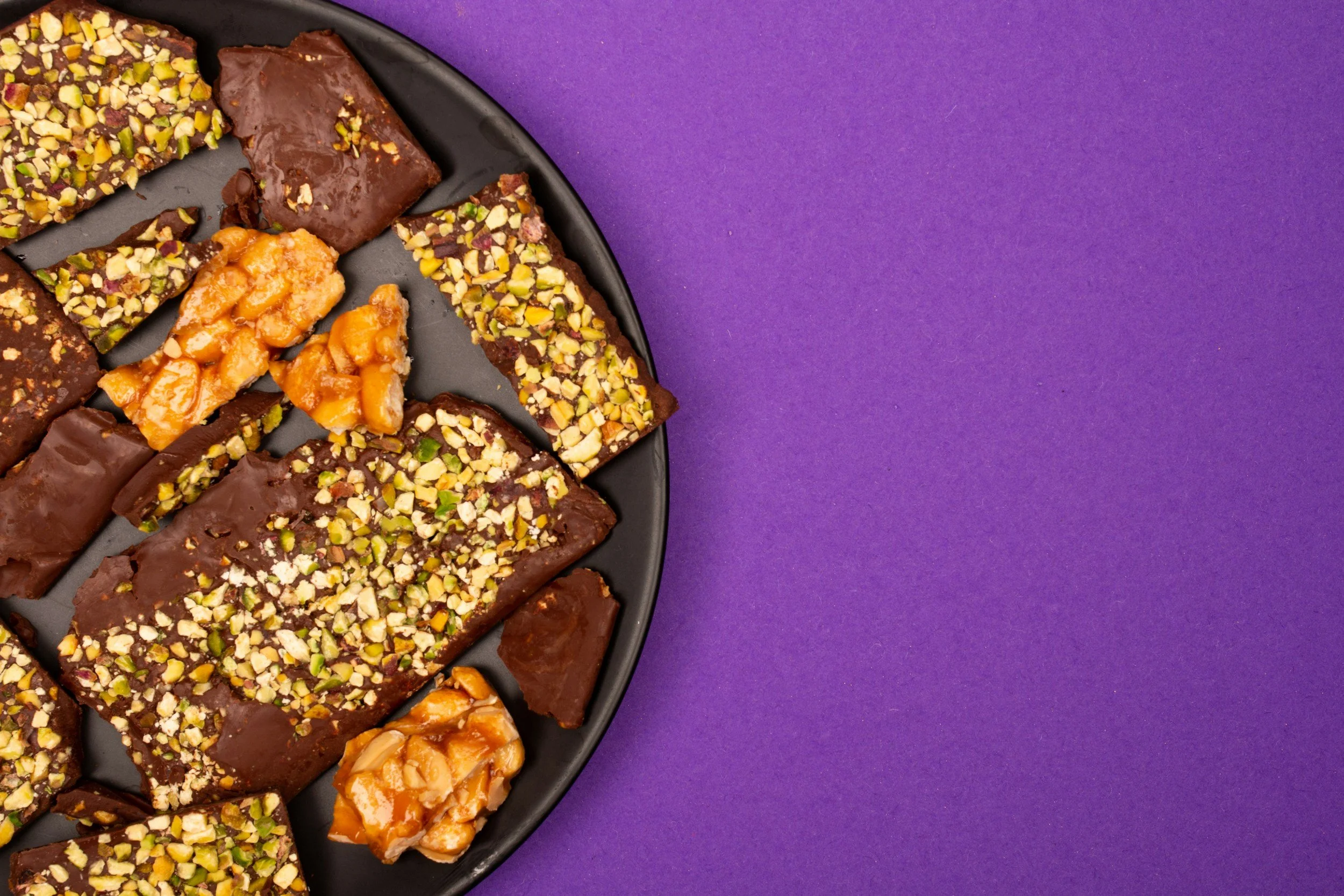
What your body is actually asking for: magnesium. Dark chocolate at 70% or above is actually a legitimate response. It delivers magnesium, is low enough in sugar not to spike blood glucose significantly, and acts as a prebiotic (it feeds beneficial gut bacteria). Other sources: pumpkin seeds, almonds, spinach, black beans.
What helps: reach for dark chocolate 70%+ rather than milk chocolate (the sugar-to-magnesium ratio matters). Add a small handful of pumpkin seeds to your daily routine. The craving often reduces when magnesium intake goes up from food sources consistently.
3. The salt craving
This one is about mineral balance, which is broader than sodium specifically.
Estrogen decline affects the renin-angiotensin-aldosterone system, which is the hormonal pathway that regulates sodium and fluid balance. As estrogen drops, aldosterone can become less efficient, and the body compensates by signalling for more sodium. You may also notice that the salt craving and thirst often arrive together, and that you feel dehydrated faster than you used to = these are related signals.
What your body is actually asking for: mineral balance, not just sodium. Plain salt addresses the sodium piece but not the full picture. Bone broth delivers sodium alongside potassium and trace minerals. Olives, miso, seaweed, and electrolyte-rich foods answer the signal more completely.
What helps: don't fight the salt craving entirely. Navigate toward mineral-rich sources. A mug of bone broth in the afternoon is one of the most practical answers to this particular signal, and it also delivers collagen and glycine, which support joint tissue and sleep.
4. The fat craving — cheese, butter, avocado, anything rich
This one is about hormone production and satiety signaling.
Steroid hormones, including estrogen and progesterone, are synthesized from cholesterol. As hormone production becomes less efficient, the body may signal for more fat because fat is the raw material for hormone precursors. At the same time, declining estrogen affects leptin sensitivity, leptin is the hormone that tells you you're full. When leptin signaling is disrupted, meals feel less satisfying even when you've eaten enough, and the body reaches for fat because fat is the most calorically dense and satiating macronutrient available.
What your body is actually asking for: healthy fat and genuine satiety. This is not a craving to override, but rather it is one to redirect toward fat sources that do more than just satisfy.
What helps: avocado, olive oil, wild salmon, full-fat Greek yogurt, walnuts, tahini. These deliver fat in forms that support inflammation reduction, omega-3 balance, and hormone precursor availability simultaneously. A craving for cheese that is redirected toward salmon and avocado is the signal being answered correctly.
5. The "I just can't feel full" experience
This one is almost always protein.
Protein is the most satiating macronutrient per gram. In perimenopause and menopause, protein needs go up. Not because you are more active, but because estrogen was supporting muscle protein synthesis and now that support has reduced. The body needs more protein to maintain what it has, and the satiety signal from an adequate protein meal becomes more important than it ever was.
Many women in perimenopause are eating at or near the standard protein recommendations, which were set for a younger, hormonally different body. The shift to 1.2g per kilogram of body weight (versus the standard 0.8g/kg) changes things significantly for most women. That persistent hunger after an apparently complete meal is often a protein gap.
What your body is actually asking for: more leucine-rich protein. Not more food in general, but more protein specifically, at every meal, eaten before anything else on the plate.
What helps: front-load protein at every meal (eat first!). Aim for 25–30g per main meal. The satiety signal from protein is strongest when protein is eaten first, before the vegetables, before the carbohydrate, before anything else. This is the single change that most consistently reduces the "nothing satisfies me" experience.
Three things to try this week
One: eat protein before anything else at every meal for seven days. Notice what happens to the 3pm craving specifically.
Two: add one tablespoon of ground flaxseed and one small handful of pumpkin seeds to your daily routine. Both address the magnesium and hormonal signalling layer simultaneously — ground flaxseed in a dressing or yogurt, pumpkin seeds on anything.
Three: when a craving arrives, ask what it is asking for rather than how to resist it. The answer is usually specific — and answerable with real food.
Want to understand the full nutritional picture behind these mechanisms?
Feed the Transition launches October 1 — a ten-page clinical nutrition guide covering all four mechanisms of perimenopause and menopause: blood sugar and energy, hormones and hot flashes, bone and muscle, and gut and brain. It maps ten key nutrients to eight symptoms and includes three food-first actions to start immediately. $7 CAD, or free with any recipe pack purchase in October.
Find out more at the link below.
